It is difficult to say when, what order ideas developed, seeing the lights going on & off of the sky-scrapers in Chicago in 1965 rows of square windows bearing a resemblance to the earlier Square Motiv paintings (1963-4) what came after the experience.

Barns-Graham’s Statement on Work 1968

An American Journey

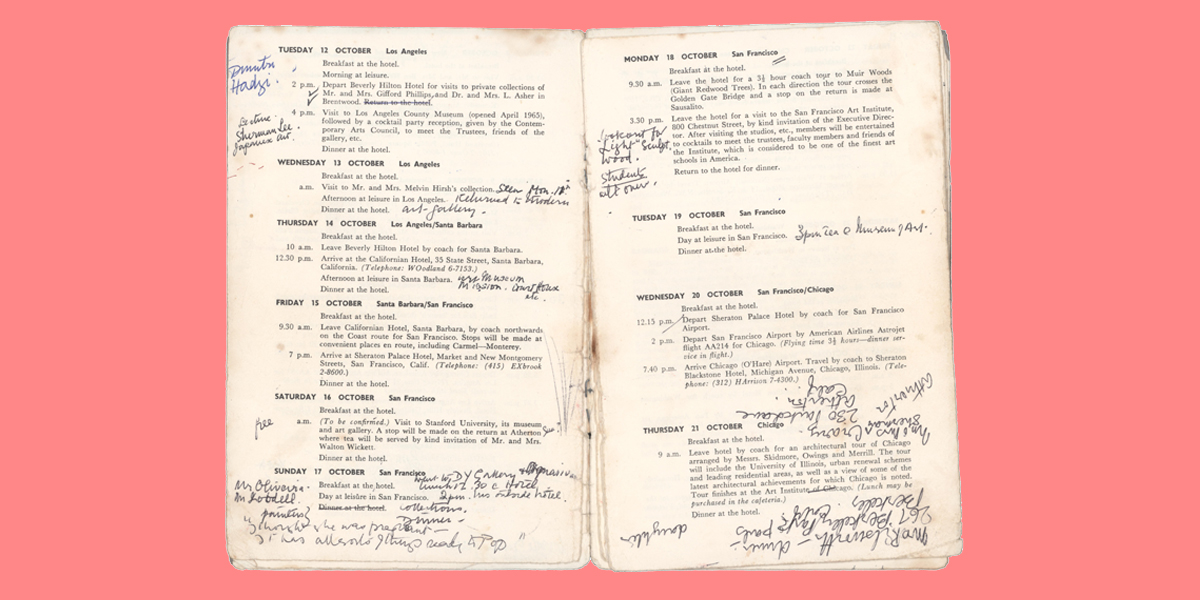
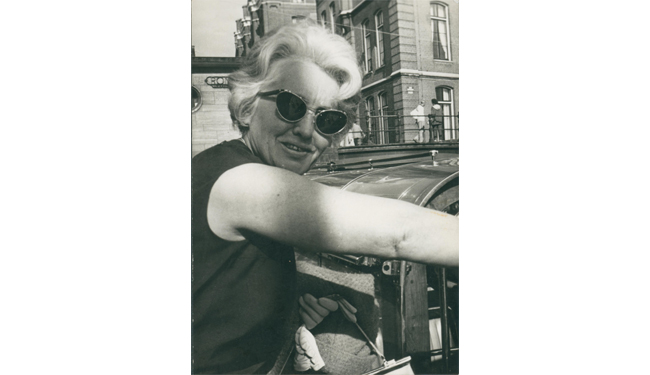
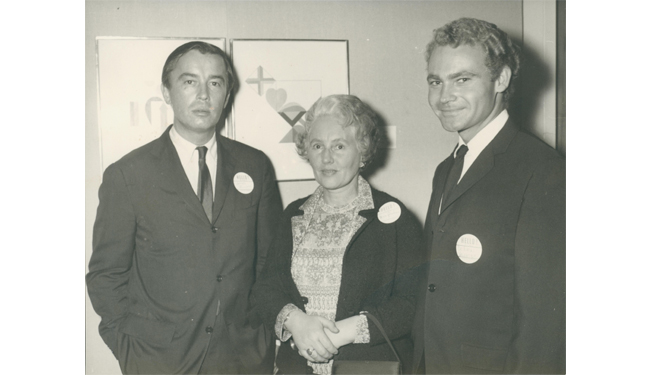
Wilhelmina Barns-Graham embarked on her American journey between 5 and 26 of October 1965 under the guidance of the Contemporary Art Society, and especially Pauline Volgelpoel, a charismatic figure of the British Art scene, who would later become the Society’s president. The three-week itinerary carried the group across the United States, from New York to Cleveland, Chicago, Los Angeles, San Francisco and Washington D.C., visiting museums, private collections and artists’ studios along the way. The party was composed largely of women, all enthusiasts of contemporary art: collectors, patrons, curators and, of course, members of the Society. Barns-Graham was therefore surrounded by a stimulating circle of influential figures, an ideal environment for an artist seeking both to promote her work and to immerse herself in the artistic developments reshaping the international scene.

Itinerary provided by the Contemporary Art Society for the USA trip, WBG/5/1/35/1

A succession of visual memories

The journey also coincided with a significant turning point in her personal life and the trip offered more than a cultural itinerary: it became an opportunity to encounter, first-hand, the American painting that was transforming the language of abstraction. The places the group visited each left a distinct impression, creating a succession of visual memories, that, like pieces of mosaic, would later find their way into Barns-Graham’s work and lifestyle. Although difficult to measure precisely, the impact of the journey can be traced in the increasing prominence and clarity of square motifs in her paintings, possibly inspired by the repetitive geometry of American skyscraper windows, as well as in a renewed sensitivity to colour and contrast, nurtured though encounters with works of artists such as Paul Klee, Jackson Pollock and Piero Dorazio in museums and private collections.

Who Was Wilhelmina Barns-Graham in 1965?

The 1960s marked a period of profound transformation in Barns-Graham’s personal life as well as in her artistic career. Following her move to London in and the finalisation of her divorce from David Lewis in 1961,  she entered a new phase defined by greater independence, new professional encounters and the opportunities offered by the capital’s increasingly international art scene. As a woman in her fifties, Barns-Graham devoted herself entirely to her practice, rebuilding her life while refining a new artistic language.

A rigorous geometric vocabulary

From 1962 onwards, her painting moved steadily away from the gestural, landscape-inflected abstraction of the previous decade towards a more rigorous geometric vocabulary. This development culminated in The Order and Disorder of Things series formally articulated in her 1988 artist’s statement. The same artistic shift was met with growing institutional recognition: at the end of 1964, Tate acquired Glacier Crystal, Grindelwald, 1950 through the Contemporary Art Society, an important milestone that not only validated her evolving practice, but also likely brought her into closer contact with Pauline Vogelpoel, then secretary of the Society and organiser of its American tour.

Although Glacier Crystal, Grindelwald, 1950 still retained traces of the strong figurative sensibility Barns-Graham developed in St Ives, her subsequent works revealed a more radical embrace of abstraction. At the Penwith Society’s Summer Exhibition in 1965, paintings such as Blue Circles on Blue and Dance of the Thermals (1964) already demonstrated the geometric language she would carry with her across the Atlantic. It was at this pivotal moment – newly independent, newly established in London and in the midst of a decisive artistic transition, that Barns-Graham embarked on her journey to the United States, an experience that would further reinforce visual vocabulary she had begun to develop.

The Journey: City by City

One of the greatest privileges in retracing Wilhelmina’s Barns-Graham American journey is that she documented almost every step along the way. Curious and observant by nature, she recorded not only what she saw, but also how she felt, leaving behind postcards, letters, diaries and lecture notes filled with vivid impressions. These personal accounts have allowed us to reconstruct her itinerary with remarkable accuracy, pairing each destination with the artworks she encountered and her own reflections on them

New York

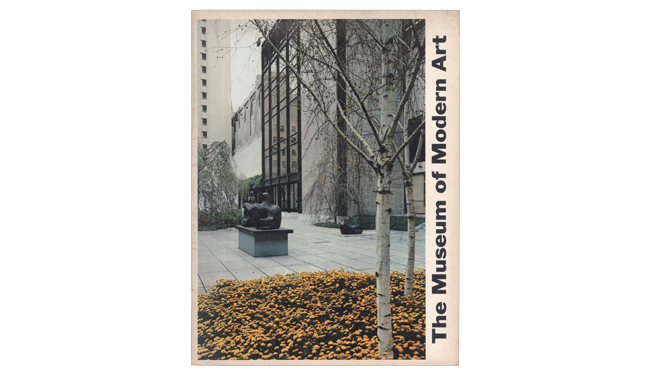
The journey began in New York, a city that, then as now, offered a striking contrast to London and Europe in general. Towering skyscrapers, relentless energy and the flourishing world of Abstract Expressionism formed the backdrop to the Contemporary Art Society’s first days in America. The group visited the Museum of Modern Art, the Guggenheim, the Whitney, the Frick Collection, the Ben Heller Collection and the Seagram Building, experiencing the city’s architecture and art as part of the same modern visual landscape.

New York cont.

Among these visits, the Robert Motherwell retrospective at MoMA left perhaps the strongest impression. She described it simply as “a total experience”. At the Frick Collection, she paused before Vermeer’s work, noting it as “one of the most beautiful” she had even seen, while the Ben Heller Collection offered an encounter with “floor to ceiling” Jackson Pollok’s canvases. Her notes reveal a traveler equally captivated by the city’s architecture, finding inspiration in the geometric rhythm of the Seagram Building as much as in the paintings hanging on museums walls.

Cleveland

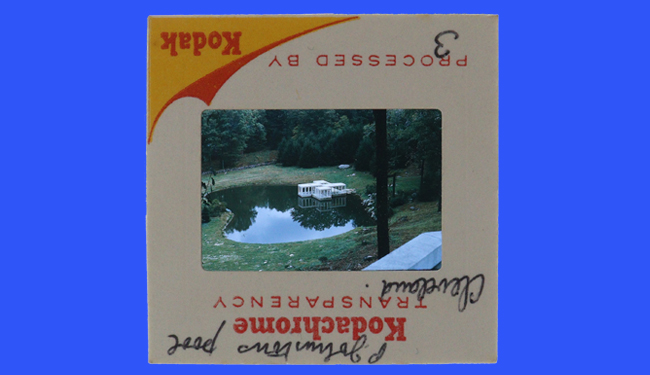
From New York, the group travelled to Cleveland, where a gallery was presenting an exhibition by Piero Dorazio. The visit carried a personal connotation: Barns-Graham had known the Italian artist since her travels to Rome in the mid-1950s, and seeing his work again renewed her interest in the expressive possibilities of color and geometry. She also visited the Cleveland Museum of Art, taking in its new gallery, which she described in her own notes as having “strange yellow-ish walls,” as well as the collections of Frank Porter and Katherine Merkel.

Los Angeles & Santa Barbara

The group then continued west to California, where a very different artistic landscape awaited them. Los Angeles was emerging as a major cultural center, and the recently opened LACMA, inaugurated only a few months earlier in April 1965 symbolized this new ambition. Alongside museum visits, the CAS itinerary offered rare access to remarkable private collections, allowing Barns-Graham to encounter works that have since disappeared from public view. She also attended a lecture given by Sherman Lee of the Cleveland Museum of Art on the Japanese exhibition, accompanied by Mrs. R. Sherwood.

Los Angeles cont.

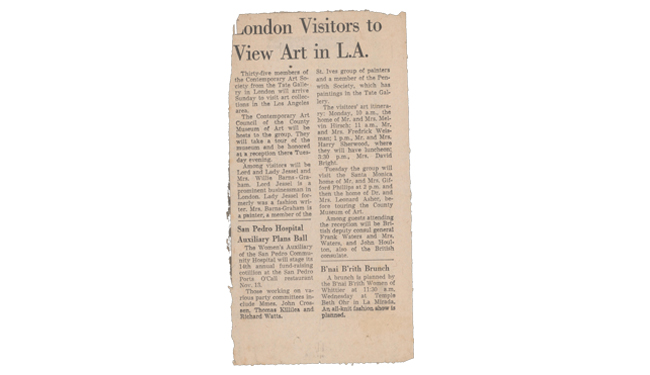
Throughout her letters and postcards, she recorded not only the artworks themselves but also the way their group was received by museum professionals, collectors, artists, and the local press. At one reception, she remarked with amusement that “everyone seems to know about us”.  An article in the Los Angeles Times, titled “London Visitors to View Art in L.A.,” introduced her to local readers as:  “Mrs. Willie Barns Graham, a painter, a member of the St. Ives group of painters and a member of the Penwith Society, which has paintings in the Tate Gallery”. A rare instance of the American press placing her within a specific artistic lineage rather than simply as a visiting British guest.

Los Angeles cont.

The Weisman Collection brough her face to face with paintings by Barnett Newman, Clyfford Still, Jackson Pollock, Willem de Kooning and more others, while the journey north along the Pacific Coast became a source of visual inspiration in its own right. Her notes linger on the colors of the Californian landscape: ochres, siennas and olive greens, and on lyrical descriptions of Seal Rock, contrasting with her amused disappointment at Hollywood’s glamour. Even overnight stops, such as the iconic Madonna Inn, found their way into her travel impressions

San Francisco

In San Francisco, visits to the de Young Museum and meetings with painters Richard Diebenkorn and Frank Lodbell deepened her understanding of the city’s artistic community, which she considered every bit as vibrant and stimulating as London’s.

Chicago

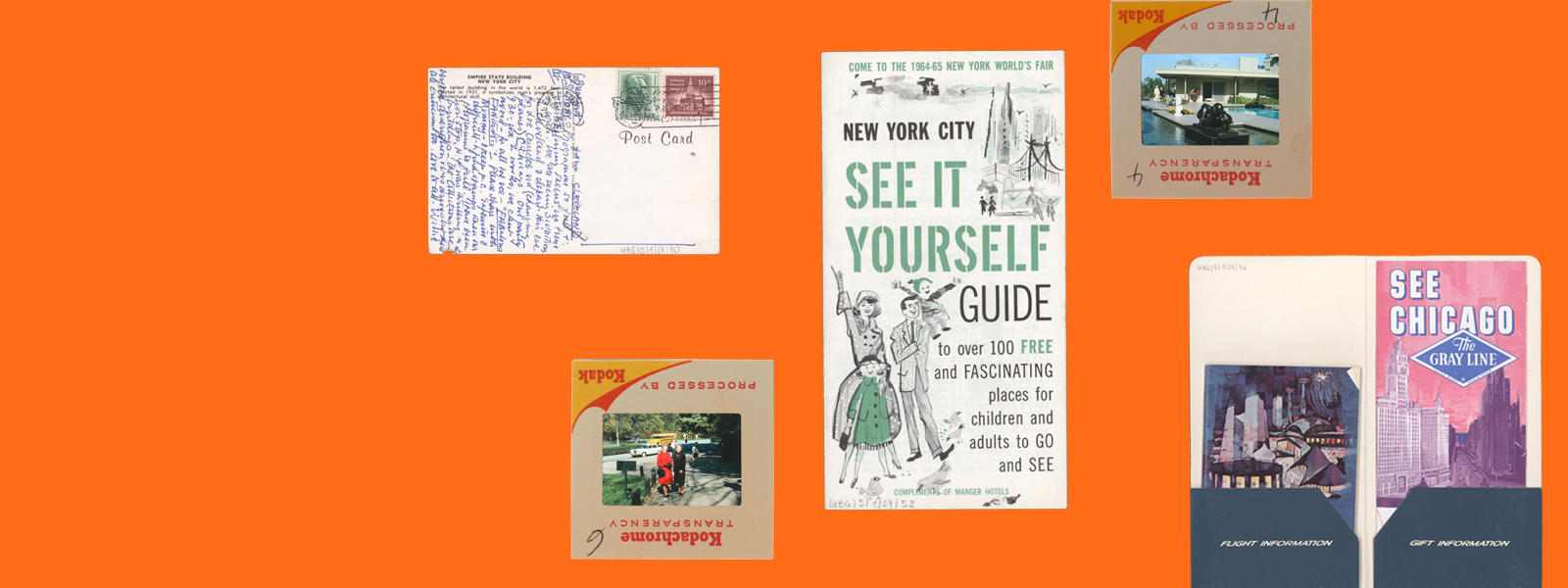
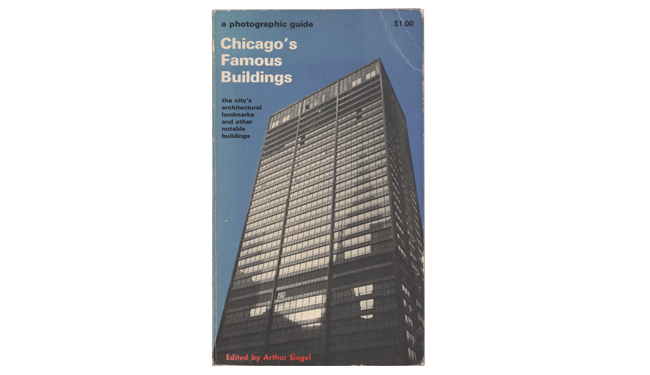
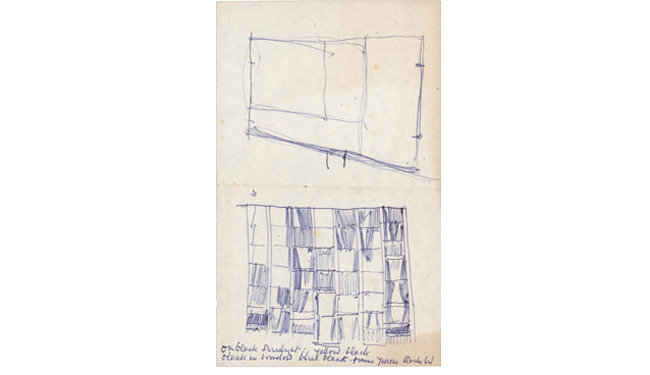
Returning East, the focus shifted from landscape to architecture. Much of this part of the journey was organized with the support of support of the architectural firm Skidmore, Owings & Merrill, whose guides, maps and itineraries accompanied the group through some of America’s modern buildings. The artists fascination with geometry found a natural counterpart in these urban environments. Among the material preserved in her archive are sketches of windows, proof of visual observations that would later reappear in the structured compositions of her paintings.

Chicago cont.

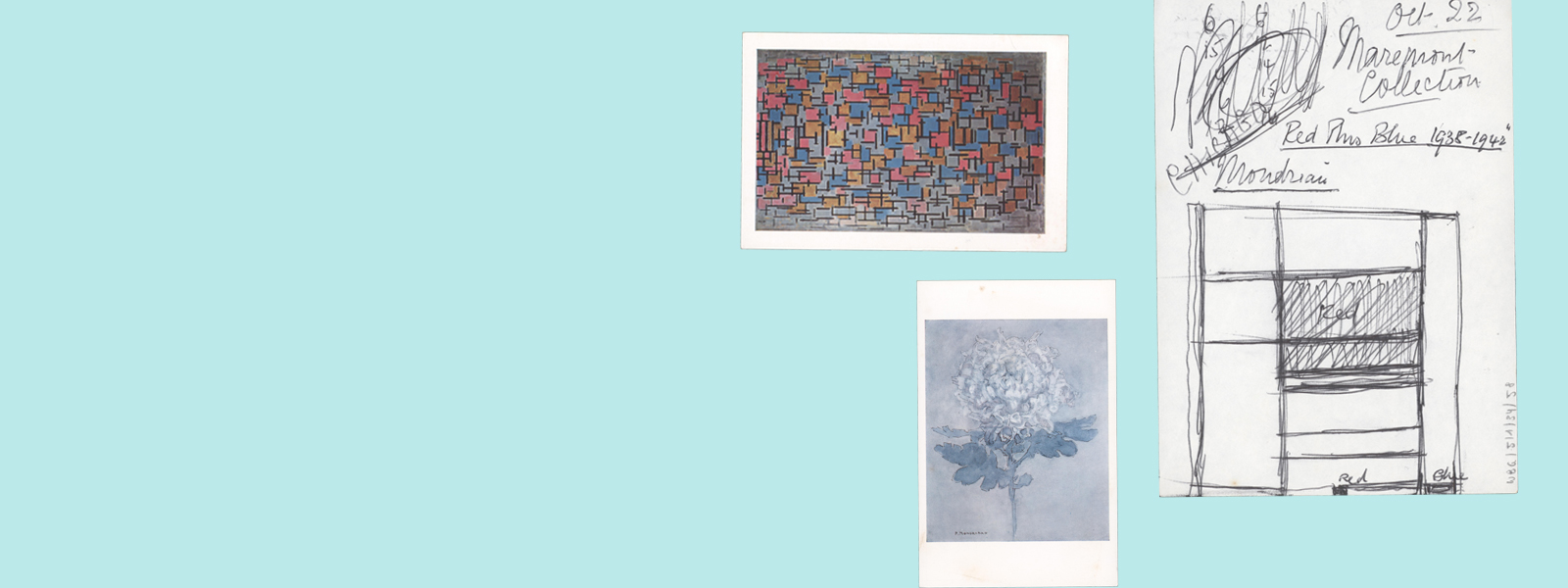
In Chicago, she explored the Art Institute’s collection, encountering works by Brancusi, Mondrian, Albers and Kelly, before visiting the private collections of Leigh Block and the Maremont family. One of her most memorable anecdotes comes from a late-night taxi journey, when a driver apologised for passing what he described as “an old building”, only for Barns-Graham to discover it was barely ten years old; a reminder of the city’s relentless pace of renewal.

Washington D.C.

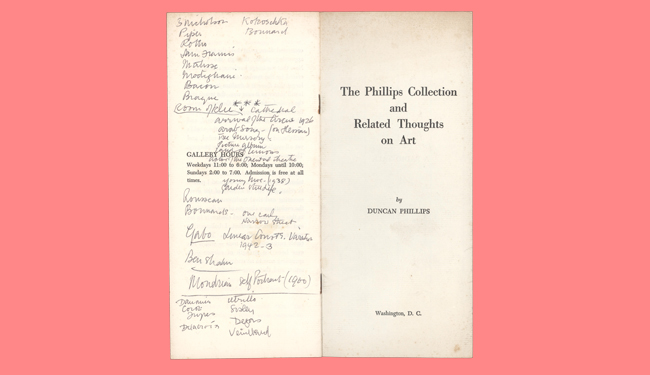
The final stop in Washington, D.C. combined modern and historical perspectives. At the Phillips Collection, the artist was particularly captivated by what she called “the unforgettable Klee Room”, revealing her lifelong admiration for him. Visits to the National Gallery, the White House and Arlington National Cemetery, where she saw President’s Kennedy’s Eternal Flame brought, they journey to a reflective close, blending encounters with art, architecture and recent history into an experience that would continue to resonate throughout her later work.

What she saw: Artistic encounters and resonances

For Barns-Graham, the journey was never simply about seeing great works of art, it was about absorbing ideas. Throughout the trip, she sketched, compared and reflected, leaving behind visual and written clues that reveal how American art and architecture resonated with her own evolving practice.

Among the artists who made the strongest impression was Piet Mondrian. Barns-Graham sketched his Red Plus Blue (1938-42) in her notebook, with particular attention to its precise geometry at a time when squares and grids were becoming central to her own work. Paul Klee, whose paintings she admired throughout her career, also left a lasting mark, particularly during her visit to the Phillips Collection.

Her notebooks also reveal an interest in Sue Fuller’s String Compositions at MoMA. Beyond the works themselves, Barns-Graham paid close attention to their aluminum frames, sketching them alongside the artworks: a detail that echoes the way she would later frame and structure her own compositions.

Elsewhere on the journey, she encountered artistic ideas that reinforced the direction her work was already taking. Piero Dorazio’s colour rhythms in Cleveland, Frank Lobbdells “falling squares” in San Francisco, and the illuminated grids of New York and Chicago’s skyscrapers all found echoes in her paintings. These encounters did not transform her practice overnight, but the strengthened an artistic language that was already emerging, built on geometry, colour, rhythm and the delicate balance between order and abstraction.

"The Order and Disorder of Things”: The trip's legacy in the artist’s work

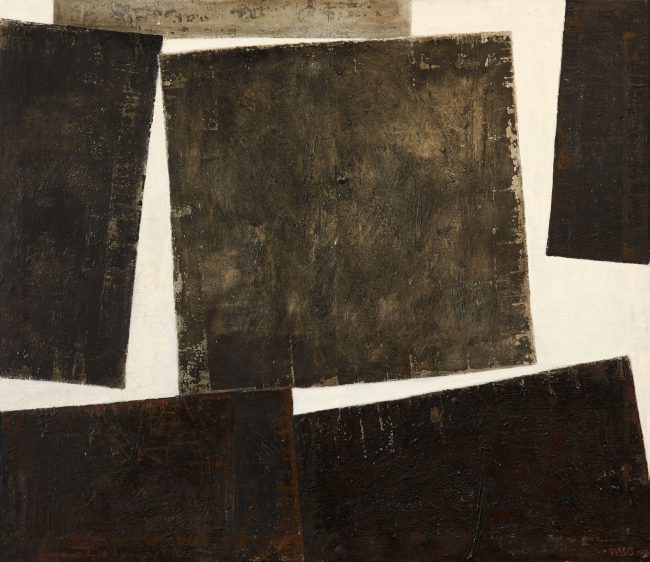
The American trip did not transform Barns-Graham’s work overnight. It reinforced and accelerated an artistic direction that was already emerging. Since 1962, she had been developing a visual language centered on squares, discs and geometric relationships, but her encounters with American art and architecture gave these ideas renewed clarity and confidence.

In her 1968 Statement on Work, Barns-Graham articulated the philosophy behind what she called The Order and Disorder of Things. Drawing on nature, perception and the balance between structure and chance, she explained how geometry and colour could express tension between order and disorder. One of her most vivid memories came directly from Chicago, where she recalled “seeing lights going on and off of the skyscrapers”, rows of illuminated square windows that echoed the motifs already present in her paintings and helped confirm the direction her work was taking.

Colour became equally important. Her notes explore complementary colours, vibration, contrast and the emotional power of composition, reflecting ideas that can be traced back to works she encountered during her American journey. Newspaper of the late 1960s would describe these paintings as “experiments” in geometry and colour, recognising the increasingly systematic approach that defined her practice.

Like every aspect of her life, Wilhelmina’s creative process was meticulously organised. She filled notebooks with thoughts on colour, relationships, lines, textures and paint mixtures, carefully recording references to nature, literature and the artists she admired: from Cézanne, Klee and Ben Nicholson, to Vermeer, Turner and Piero della Francesca. Her notes repeatedly return to a central question: “where to draw the line between outward observation and inward perception?”. It is perhaps this balance, between what she experienced and what she transformed, that best defines the lasting legacy of her American journey.

Artist as Observer

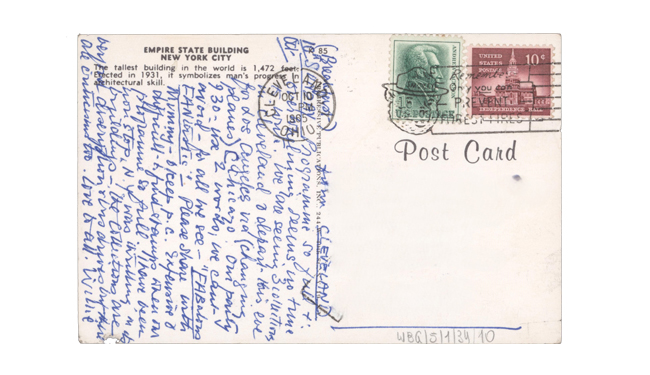
Beyond the paintings she encountered, the archive reveals something equally fascinating: Barns-Graham herself. Curious, perceptive and endlessly observant, she paid as much attention to wall colors, lighting and architecture as she did to the artworks on display. Her postcards capture not only exhibitions but also conversations, dinners, journeys and first impressions, bringing the trip vividly to life.

Written to family and herself back in the U.K., these postcards are filled with enthusiasm. Again and again, Barns-Graham underlined the words “fabulous” and “fantastic” to describe the collections she visited, calling some simply “beyond description”. She also noted the excitement surrounding the tour itself, mentioning photographers, press coverage, cocktail parties and, with amusement, that “everyone seems to know about us”.

The journey also marked the beginning of a lasting friendship with Pauline Vogelpoel, the Contemporary Art Society’s Organizing Secretary and later its director. Their correspondence continued for more than three decades, reflecting a relationship that began with the Society’s support for the artist’s work, including the acquisition of Glacier by the Tate in 1964.

Through these letters and postcards, Barns-Graham emerges not only as an artist, but as a remarkable observer: someone whose curiosity extended far beyond canvas, and whose ability to notice, record and remember shaped both her travels and her art.

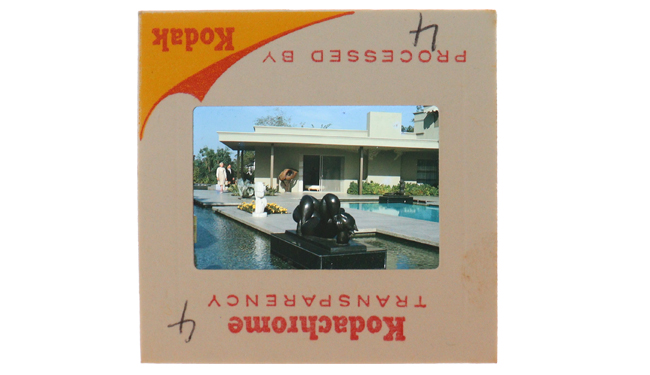
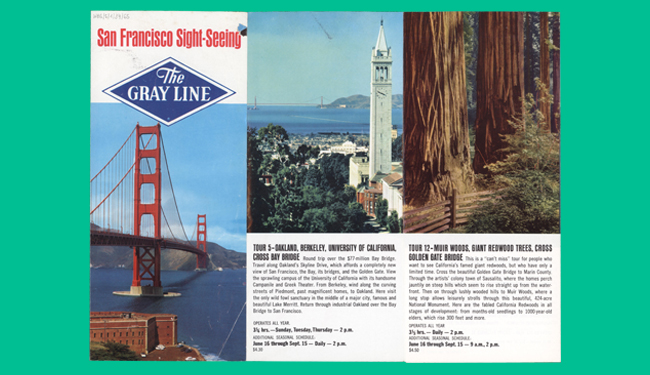
These personal observations resulted in something quite unusual for Barns-Graham: she compiled her notes and presented them in the form of lecture at the Playgoers Theatre Club, illustrated with personal anecdotes, pamphlets and slides bought or taken during her trip. This could be read as a sign of how deeply the trip affected her: a new breath of artistic inspiration and a new confidence in public speaking. We can, in fact, confirm that Barns-Graham had this lecture in mind well before the trip ended, since she mentioned it to one of the collectors she met in Cleveland, near the very beginning of her journey.


Square Motive I, 1965, oil on canvas, BGT6456

More than a cultural tour

More than a cultural tour, Barns-Graham’s 1965 journey across America was a sketchbook in motion. Every museum, private collection, city skyline and postcard became part of her creative process, carefully observed, recorded and later transformed into paint.

Like her visit to the Grindelwald Glacier in 1949, a defining moment that reshaped her understanding of landscape, the American tour marked another turning point. It did not change the direction of her work overnight, but it confirmed and strengthened the geometric language she had already begun to develop, leaving lasting traces in her colors, forms and ways of seeing.

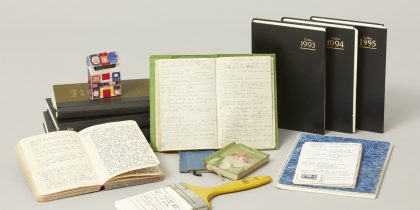
Today, the archive allows us to follow that transformation almost step by step. Typed itineraries sit alongside handwritten sketches, postcards, letters and newspaper clippings, revealing not simply the story of a journey, but the portrait of an artist thinking, looking and creating.

With thanks to Aglaïa Rozental for writing this section on Barns-Graham’s journey to America. Aglaïa researched and catalogued material across the collection and archive relating to Barns-Graham’s trip to the USA and subsequent artistic output as part of a student placement project from the University of St Andrews Museum and Heritage Studies Masters degree.

Discover More

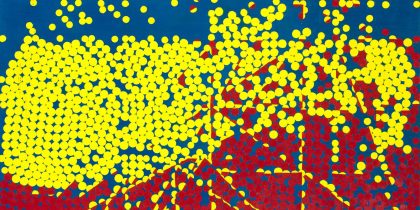
Painting with blue background. In the middle of the painting, a mass of small yellow dots collide with one another, some partially shade red. At the bottom, a mass of small red dots collide with one another, some partially shaded yellow

Things of a Kind in Order and Disorder

Between 1963 and 1973, Barns-Graham’s output focussed on the interaction of simple geometric forms

Learn more
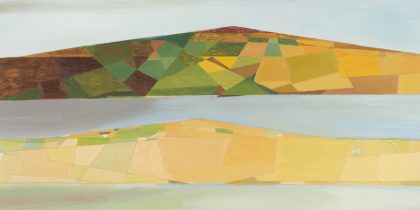
An oil painting with bands of sky, land, sea, land and sea. The sky and sea are in similar greeny-greys. The land is divided into smaller geometric shapes in browns, greens and yellows.

Her Next Journey

Twenty years after travelling to America, Barns-Graham took a somewhat shorter, but no less inspiring journey to Orkney.

Learn more

Delve Deeper

The Trust houses Wilhelmina Barns-Graham’s extensive archive of papers relating to her artistic career.

Visit the archive