


Through the Looking-Glass: Tracing Barns-Graham’s Multiplicity
In the Tate Archives in London, I come across a note from Willie to fellow artist Ben Nicholson, written backwards. It requires a mirror’s reflection to decode her message, which insists she is looking forward to seeing his latest show. This subversive playfulness and the necessity of the slantwise gaze or unexpected angle flickers at the core of my work placement this year with the Barns-Graham Trust.
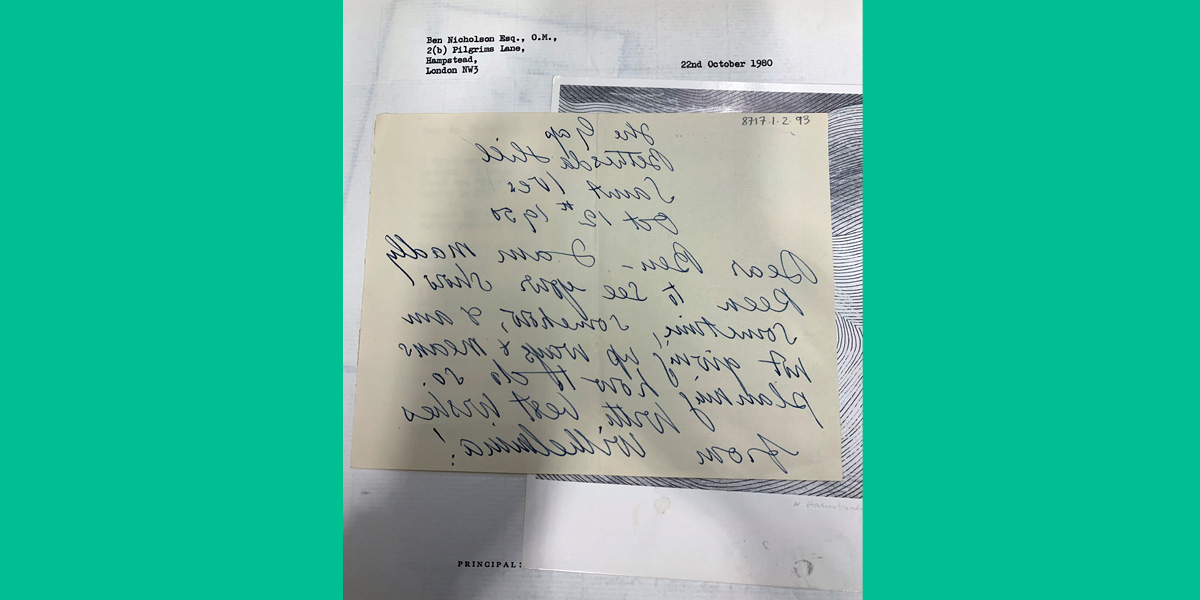
Note from Barns-Graham to Ben Nicholson written using her backwards writing technique, Tate Archive
Wilhelmina Barns-Graham’s career was prolific and ever-evolving, and it is precisely its dazzling variety that can render it a challenge to comprehensively catalogue. Having trained at Edinburgh College of Art in the 1930s and moved to Cornwall in 1940, by the 1950s Willie was in a rhythm of creation fed by her involvement with artistic networks like the Penwith Society of Arts (Willie contributed to most of their quarterly exhibitions from the Penwith’s founding in 1949 until her death in 2004). In addition to the Penwith Gallery, she displayed her work at the Scottish Gallery; Roland, Browse and Delbanco; and Redfern Gallery within the UK.
What some may not be aware of is the sheer scope of Willie’s international connections; throughout the 1950s and 60s, she was successfully exhibiting her art in New York City, Sweden, Canada, Australia, Hong Kong, and France. During my internship, it has been my responsibility to sift through existing archival materials concerning Willie’s early career, adding confirmed artworks from relevant exhibitions to a spreadsheet to be repurposed into user-friendly data – seeking novel information as well as logging it in a systematic way. Often this project has entailed taking an unconventional approach; for example, assessing diary entries, invoices, and correspondence to ascertain missing exhibition details.
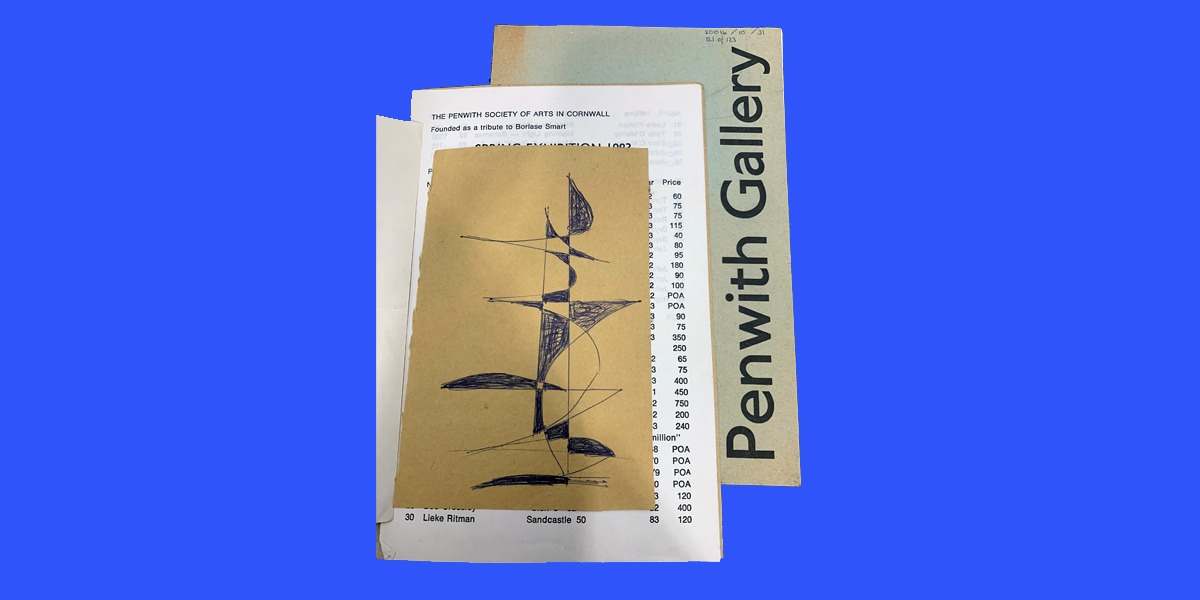
Exhibition catalogue with drawing by Barns-Graham inserted, Penwith Archive
This search has naturally led to contact with other institutions possessing materials the Trust does not currently hold in an effort to fill any gaps. I corresponded with the Penwith Archive to better understand Willie’s longstanding relationship with the institution, in addition to gleaning data about Willie’s shows linked to the Royal West of England Academy and Women’s International Art Club among others. Even a visit to the National Gallery of Scotland’s archive revealed particulars about Barns-Graham’s participation in Scottish Paintings 1968 at the Demarco Gallery.
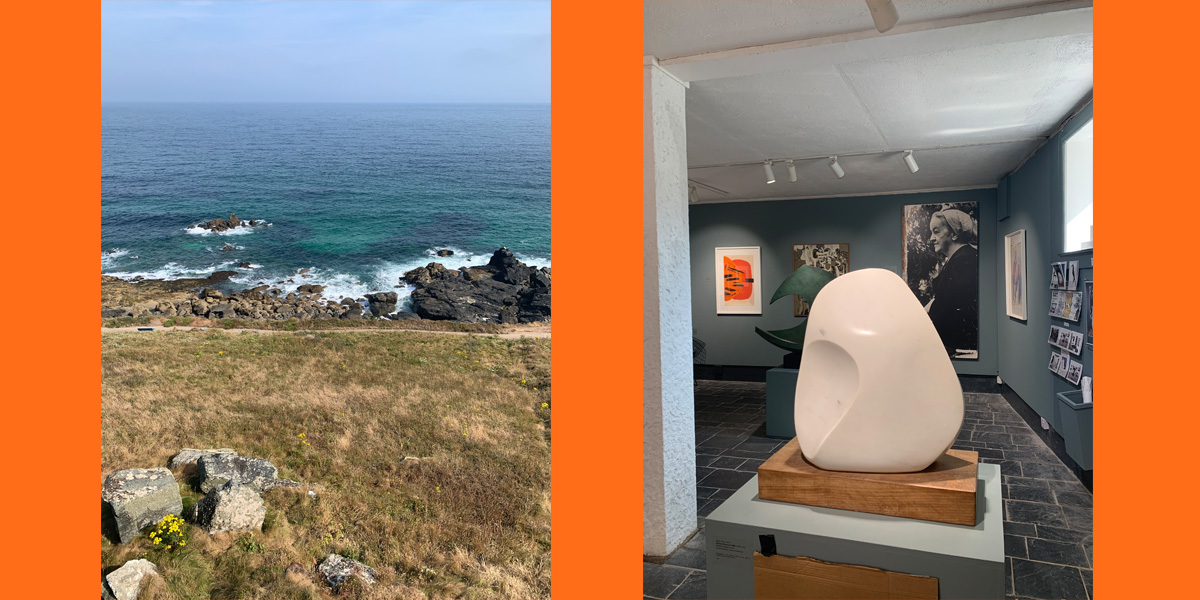
Retracing Barns-Graham's steps in West Penwith and the Penwith Gallery
Through prolonged attention to Willie’s life and art, I unlocked the joy of expecting the unexpected. A research trip to Cornwall enabled me to invaluably retrace her steps – from the Penwith Gallery to Porthmeor Studios to Porthgwidden Beach to the Mariners’ Church, where the Crypt Group once put on exhibitions. I even had the serendipity of chatting with someone who knew Barns-Graham; he spoke with a smile of his admiration for her stubbornness and commitment to her practice. Willie’s presence is still alive at the coastline, in people’s memories and the patterns of the breakers. Like the waves that crash again and again, mutable and resilient, I find Willie contains multitudes and am reminded of one of her own statements:
‘Living becomes part of work, work is being alive, being alive is being aware or of becoming aware of the miracle of the underlying structure & inventiveness of NATURE’.